

Casino Payments in Alberta: The Big Picture
Choosing how to fund an online casino account in Alberta matters as much as choosing the casino. The method affects how fast you can play, how fast you get paid, what fees you absorb, and how much personal banking data you share. It also tells you something about the operator: regulated sites tend to offer Canadian-friendly, traceable payment rails rather than anonymous or offshore-only options.
This guide covers every mainstream method used at Alberta-facing casinos, the legal framework behind them, and practical checks you can run before you deposit a single dollar. All amounts are in Canadian dollars (CAD).
- Interac e-Transfer – the default choice for most Albertans with a Canadian bank account
- Debit and credit cards – Visa and Mastercard, with important bank-level restrictions
- iDebit and Instadebit – bank-linked intermediaries that keep card data off the casino
- PayPal – a familiar e-wallet, offered by some operators only
- Apple Pay – mobile-first, usually deposit-only
- Bank transfer – slow but suited to larger withdrawals
| Question | Short answer |
|---|---|
| Who regulates gambling in Alberta? | Alberta Gaming, Liquor and Cannabis (AGLC) |
| Who manages the commercial iGaming market? | Alberta iGaming Corporation (AiGC) |
| Which law sets up the open market? | The iGaming Alberta Act |
| Minimum age to gamble online | 18+ |
| Most common deposit method | Interac e-Transfer |
The Legal Framework Behind Casino Payments
Payments do not exist in a vacuum. Every deposit and withdrawal at a regulated Alberta casino sits inside a legal structure built by the province and by federal financial law. Understanding that structure helps you recognise when an operator is following the rules and when it is not.
Under the Criminal Code of Canada, provinces are responsible for conducting and managing gambling within their borders. Alberta historically did this through its own government site, PlayAlberta, run by AGLC. The province then moved to open its online market to private operators under a provincial framework.
- Federal level: the Criminal Code gives provinces authority over gambling; federal anti-money-laundering law governs financial reporting
- Provincial level: Alberta legislation, AGLC oversight and AiGC market management
- Operator level: registration, player verification, safer-gambling tools and payment controls
AGLC: Registration and Regulation
Alberta Gaming, Liquor and Cannabis is the provincial regulator. In the iGaming context, AGLC is responsible for registering operators and gaming suppliers, setting and enforcing standards, and holding registered businesses to account. If an operator breaks the rules, AGLC is the body with regulatory powers over it.
| AGLC role | What it means for your payments |
|---|---|
| Operator registration | Only vetted businesses should be taking Alberta players’ money |
| Standards and compliance | Rules on fair play, player protection and record-keeping |
| Enforcement | A regulator you can escalate to if a registered site misbehaves |
AiGC: Market Management and Operator Agreements
The Alberta iGaming Corporation was created to manage the province’s online gaming market. Where AGLC regulates, AiGC handles the commercial side: it enters into agreements with operators that want to offer games to Albertans. A legitimate private operator in the regulated market should therefore have both an AGLC registration and a commercial relationship with AiGC.
- AGLC answers the question: “Is this operator allowed and compliant?”
- AiGC answers the question: “Is this operator part of Alberta’s managed market?”
The iGaming Alberta Act
The iGaming Alberta Act is the provincial legislation that establishes the legal basis for a regulated, competitive online gaming market. It created AiGC and set out the framework within which private operators can be authorised. Detailed operational rules, including technical standards, are set through regulation and AGLC standards rather than written line by line into the Act itself.
Because the market is still maturing, specific rules can be updated. When a detail matters to you, such as a requirement around withdrawals, check the current AGLC publications directly rather than relying on older articles.
- Establishes the open iGaming market in Alberta
- Creates the Alberta iGaming Corporation
- Works alongside AGLC’s regulatory authority and standards
Age Requirement: 18+
The legal gambling age in Alberta is 18. Regulated operators must verify your age and identity, and that verification is tied directly to payments: a casino will not process withdrawals to an account it cannot match to a verified adult. Expect to provide government ID, and sometimes proof of address, before your first cash-out.
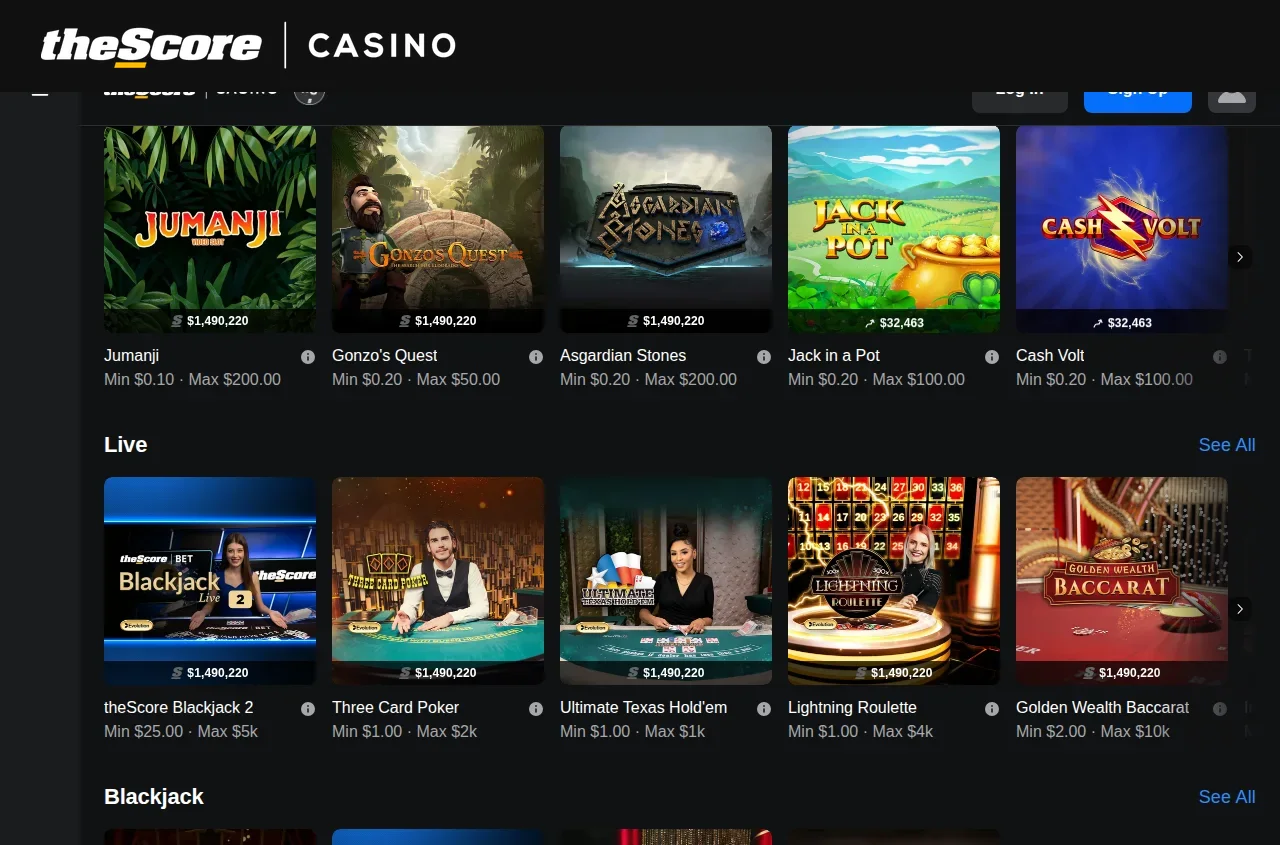
Among the brands we have reviewed, theScore Casino is one we record as listed on the Alberta register, while Bet365 Casino runs a dedicated Alberta domain and displays an AGLC registration ID of 120500.

- iOS 4.7 · Android 4.3 apps
- 24/7 live chat in the app
- Volt open-banking payments
How Payment Rules Protect Alberta Players
Regulated casinos are treated as businesses that handle significant sums of money, so they must follow anti-money-laundering and identity rules. In Canada, casinos are reporting entities under federal law administered through FINTRAC (Financial Transactions and Reports Analysis Centre of Canada). That is why deposits and withdrawals involve checks that can feel slow but exist for good reasons.
| Control | Why it exists | What you will notice |
|---|---|---|
| Know Your Customer (KYC) | Confirm identity and age | ID upload before withdrawals |
| Name matching | Prevent fraud and third-party funding | Payment account must be in your name |
| Closed-loop payouts | Reduce laundering risk | Withdrawals often go back to the deposit method |
| Transaction monitoring | Detect unusual patterns | Occasional source-of-funds questions |
The Closed-Loop Principle
Many operators apply a “closed-loop” policy: money goes back out the way it came in, as far as possible. If you deposit by Interac, expect to withdraw by Interac or bank transfer. If you deposit with Apple Pay, which rarely supports payouts, the casino will route your withdrawal to an alternative verified method.
- Plan your withdrawal route before you choose a deposit method
- Do not mix several deposit methods casually – it can complicate payouts
- Keep the same name on every account: casino, bank and e-wallet
Pro tip: Complete identity verification right after you register, not when you win. Uploading a clear photo ID and a recent utility bill on day one usually removes the biggest delay from your first withdrawal, and it shows you early whether the operator’s support team is responsive.
Interac e-Transfer: Alberta’s Default Choice
Interac e-Transfer is the most widely used casino payment method in Canada, and Alberta is no exception. It moves money directly from your Canadian bank account using your online banking, without sharing card numbers with the casino. Almost every major Canadian bank and many credit unions, including Alberta-based ones, support it.
How an Interac Casino Deposit Works
The exact flow depends on the casino’s payment processor, but the steps are broadly the same everywhere.
- Open the cashier and choose Interac e-Transfer.
- Enter the amount in CAD and confirm your email or mobile number.
- You are redirected to, or receive a request in, your online banking.
- Approve the transfer from your chequing account.
- Funds usually appear in your casino balance within minutes.
Interac transfers are protected by your bank’s own login security. The casino never sees your banking password, and the transaction appears on your statement under the processor’s or operator’s name.
Pro tip: Note which merchant name appears on your bank statement after your first Interac deposit. Processors sometimes use a name that differs from the casino brand. Knowing it in advance makes it far easier to match transactions, budget accurately and spot anything you did not authorise.
Interac Limits and Fees
Limits come from two places: your bank and the casino. Banks set daily and weekly e-Transfer caps that vary by institution and account type. Casinos set their own minimum and maximum per transaction. Neither is standard across the market, so check both.
| Factor | Who controls it | Where to check |
|---|---|---|
| Daily/weekly send limit | Your bank | Online banking settings or branch |
| Minimum deposit | The casino | Cashier or payments page |
| Maximum withdrawal | The casino | Terms and conditions |
| Transfer fee | Bank and/or casino | Bank fee schedule and casino terms |
As examples from our own reviews, BetVictor accepts Interac deposits from $10, and Captain Cooks Casino lists a CA$5 minimum deposit. Always confirm current figures in the cashier, since operators can change them.

- 24/7 live chat support
- Evolution live dealer tables
- iOS and Android apps
Interac Withdrawals
Not every casino that accepts Interac deposits also pays out by Interac. Where it does, withdrawals pass through two stages: the casino’s internal review (pending period) and the transfer itself. The transfer is usually quick; the pending period is what varies most between operators.
- Pending period: set by the casino, can range from instant to a few business days
- Verification: unverified accounts are held until KYC is complete
- Weekends and holidays: manual reviews may slow down outside business hours
Operators we have reviewed that highlight Interac e-Transfer include TonyBet, which we record as AGLC-registered in Alberta, and Ruby Fortune.

- AGLC-registered for Alberta
- Live dealer tables
- Browser play on iOS/Android
iDebit and Instadebit
iDebit and Instadebit are Canadian payment services that sit between your bank and the casino. You log in through the service, connect your bank account, and the service pays the casino on your behalf. The appeal is that your card and banking details are not shared directly with the operator.
| Feature | iDebit | Instadebit |
|---|---|---|
| Funding source | Canadian online banking | Canadian bank account |
| Account required | Yes, with the service | Yes, with the service |
| Withdrawals | Supported at many casinos | Supported at many casinos |
| Fees | Check service and casino terms | Check service and casino terms |
When iDebit or Instadebit Makes Sense
These services are useful when your bank blocks direct gambling transactions or when a casino does not support Interac payouts. They also add a separate transaction history, which some players find helpful for tracking spending. The trade-off is one more account to open and verify.
- Good fallback if Interac is unavailable at a specific operator
- Keeps bank credentials away from the casino
- Requires its own sign-up and identity check
- Fees, if any, can change – read the current schedule before use
PayPal at Alberta Casinos
PayPal is familiar to most Canadians from everyday online shopping, and it is valued for buyer protection, two-factor login and fast transfers between accounts. In gambling, PayPal applies its own policies and generally works only with operators it approves in permitted jurisdictions. That is why PayPal tends to appear at regulated sites rather than offshore ones.
Availability is operator-specific. A casino may list PayPal for deposits but not for withdrawals, or offer it only after your account is verified. Check the cashier, not just the marketing pages.

In our testing, Golden Tiger Casino stood out for PayPal payouts in under 24 hours, and it also offers 24/7 live chat if a transaction needs chasing.

- Registered with AGLC and AiGC
- Games Global & Pragmatic Play
- $10 minimum deposit
PayPal Pros and Cons
PayPal is a strong option where offered, but it is not right for every player. Weigh both sides before linking it to your casino account.
- Card and bank details stay inside PayPal, not with the casino
- Withdrawals are often among the fastest once approved
- Two-factor authentication protects the wallet itself
- Clear transaction history for budgeting
- Generally associated with regulated, approved operators
- Not available at every Alberta-facing casino
- Some operators exclude PayPal deposits from promotions – read the terms
- Currency conversion fees may apply if anything is not in CAD
- Your PayPal and casino account names must match exactly
Setting Up PayPal for Casino Use
A few minutes of preparation avoids most PayPal-related payout delays.
- Confirm your PayPal account is verified and in your legal name.
- Link a Canadian bank account and set CAD as your primary currency.
- Make your first casino deposit with PayPal so the payout route is established.
- Complete casino KYC before requesting a withdrawal.
Debit and Credit Cards
Visa and Mastercard are accepted at many Alberta-facing casinos, but cards behave differently depending on whether they are debit or credit, and on which bank issued them. Some Canadian banks restrict or decline gambling transactions on credit cards, so a declined deposit is not necessarily the casino’s fault.
| Card type | Deposits | Withdrawals | Key caution |
|---|---|---|---|
| Visa Debit / Mastercard Debit | Widely accepted | Sometimes supported | Funds come straight from chequing |
| Visa / Mastercard credit | Accepted where issuer allows | Often not supported | Possible cash-advance treatment and interest |
Why Credit Cards Need Extra Care
Some card issuers code gambling purchases as cash advances, which can mean an immediate fee and interest charged from the transaction date with no grace period. Policies differ between banks, so read your cardholder agreement. From a responsible-gambling point of view, gambling with borrowed money is a recognised risk factor.
- Check whether your issuer treats gambling as a cash advance
- Expect payouts to go to another method, not back to the credit card
- Never carry a gambling balance you cannot clear in full
Card acceptance at LuckyDays Casino includes Visa alongside Interac and Apple Pay, according to our review.

- Live chat 24/7
- iOS and Android apps
- PayPal payouts in 24 hours
Apple Pay
Apple Pay lets iPhone and iPad users deposit with a card stored in their Apple Wallet, authorised by Face ID, Touch ID or passcode. The casino receives a tokenised payment rather than your actual card number, which adds a layer of security on mobile.
Apple Pay: Strengths and Limits
| Aspect | Detail |
|---|---|
| Security | Biometric approval and tokenised card data |
| Speed | Deposits typically near-instant |
| Withdrawals | Usually not supported – plan an alternative payout route |
| Underlying card | Issuer rules still apply, including gambling restrictions |
Because the underlying card is still a Visa or Mastercard, the bank restrictions described above still apply. Among reviewed brands, Spin Casino and Jackpot City both list Interac and Apple Pay.

- 26 studios in the lobby
- iOS and Android apps
- 24/7 live chat support
Direct Bank Transfer
A traditional bank or wire transfer is the slowest method on this list, but it remains useful for larger withdrawals that exceed e-wallet or Interac caps. The casino sends funds directly to your verified Canadian account.
- Speed: generally slower than Interac or e-wallets, measured in business days
- Fees: your bank or an intermediary bank may charge for incoming wires
- Details needed: institution number, transit number and account number
- Best for: high-value cash-outs and players who prefer no third-party wallets
Pro tip: Before requesting a large bank transfer, call your bank and ask whether incoming wires carry a fee and whether large deposits trigger a hold. Knowing this in advance avoids surprises and gives you a paper trail if the funds take longer than the casino’s stated window.
Alberta Casino Payment Methods Compared
The table below summarises how each method generally behaves. Exact limits, fees and processing times are set by each casino and your bank, so treat this as a starting point rather than a guarantee.
| Method | Deposits | Withdrawals | Shares bank/card data with casino? | Typical use |
|---|---|---|---|---|
| Interac e-Transfer | Yes | Often | No | Everyday play |
| Debit card | Yes | Sometimes | Yes (card) | Quick deposits |
| Credit card | Where issuer allows | Rarely | Yes (card) | Use with caution |
| iDebit / Instadebit | Yes | Often | No | Interac alternative |
| PayPal | Where offered | Where offered | No | Fast payouts |
| Apple Pay | Yes | Rarely | No (tokenised) | Mobile deposits |
| Bank transfer | Sometimes | Yes | Account details | Large withdrawals |
Matching a Method to Your Priorities
- Fastest payouts: PayPal or Interac at operators with short pending periods
- Maximum privacy from the casino: Interac, iDebit/Instadebit or PayPal
- Mobile convenience: Apple Pay for deposits, paired with Interac for withdrawals
- Large wins: bank transfer, after checking your bank’s incoming-wire policy
- Budget control: debit-based methods rather than credit
Fees, Processing Times and Hidden Costs
Most regulated casinos do not charge for standard deposits, but costs can still appear elsewhere. The total cost of a transaction is the casino fee plus any bank, wallet or currency fee.
| Potential cost | Where it comes from | How to avoid it |
|---|---|---|
| Currency conversion | Non-CAD balances or wallets | Keep every account in CAD |
| Cash-advance fee | Credit card issuer | Use debit-based methods |
| Withdrawal fee | Some casinos, above set frequency | Read the payments terms |
| Incoming wire fee | Your bank | Ask your bank in advance |
| Dormant-account fee | Some operators after inactivity | Withdraw and close unused accounts |
Why Withdrawals Take Longer Than Deposits
Deposits are instant because the money is flowing toward the operator. Withdrawals go through review: KYC confirmation, bonus-wagering checks and anti-fraud monitoring. Only after approval does the payment provider’s own processing time begin.
- Request: you submit the withdrawal in the cashier
- Pending: the casino reviews and may let you reverse it
- Approval: compliance signs off
- Processing: the payment method transfers funds
- Receipt: money lands in your bank or wallet
Some players disable withdrawal reversal through the account settings or ask support to do so, which removes the temptation to cancel a cash-out and keep playing. This is one of several simple safer-gambling habits worth adopting.
How Payment Choice Affects Bonuses
Promotional terms sometimes exclude certain payment methods from welcome offers or reload deals. This varies by operator, so the only reliable source is the bonus terms for the specific promotion. We do not quote bonus figures here because they change frequently.
- Check whether your chosen method qualifies before depositing
- Look for minimum qualifying deposit amounts in CAD
- Understand that wagering requirements must usually be met before withdrawal
- Remember that declining a bonus is always an option if terms do not suit you
Other reviewed operators with Alberta registration details we have recorded include Casino Classic, registered with AGLC and AiGC, and Zodiac Casino and Yukon Gold Casino, both AGLC-regulated in Alberta.
Checklist Before Your First Deposit
Run through these points before you share any payment details. Several of them take less than a minute and can prevent the most common payment headaches.
| Check | Why it matters |
|---|---|
| Operator is registered with AGLC | Confirms regulatory oversight and a route for complaints |
| Operator is part of the AiGC-managed market | Confirms it is authorised to serve Albertans commercially |
| Cashier shows CAD | Avoids conversion fees |
| Withdrawal methods are listed clearly | Shows you how money comes back out |
| Deposit limits tool is available | Lets you set a budget from day one |
| Payment terms are easy to find | Transparent operators publish pending times and limits |
- Use only payment accounts in your own name
- Set a deposit limit before your first transaction
- Save screenshots of deposits and withdrawal requests
- Keep your casino login separate from your banking passwords
Identity Verification and Your First Withdrawal
Every regulated operator in Alberta must confirm who you are before releasing money. This is Know Your Customer (KYC) verification, and it ties directly to the payment rules above. Your casino account, your payment account and your ID must all match, or a withdrawal stalls.
Most players hit KYC at their first cash-out, not at sign-up. Completing it early removes the most common cause of payout delays.
Documents Operators Typically Request
- Government photo ID: an Alberta driver’s licence, Alberta ID card or passport
- Proof of address: a recent utility bill or bank statement showing your Alberta address
- Payment proof: a statement or screenshot showing the account or card used to deposit, with sensitive digits hidden
- Selfie or liveness check: some apps use automated face matching instead of manual review
Requests vary by operator and by the size of your transactions. Larger withdrawals can trigger additional source-of-funds questions under federal anti-money-laundering rules that apply to Canadian gambling businesses.
How to Speed Up Verification
- Upload documents right after registering, before you deposit
- Use the exact legal name that appears on your bank account
- Send clear, uncropped photos showing all four corners
- Check that your address matches across ID, bill and casino profile
- Reply to support messages quickly — reviews often pause while waiting
Pro tip: If you moved recently, update the address with your bank first. A mismatch between your bank statement and your casino profile is one of the most frequent reasons KYC gets bounced back for a second round.
What Happens If Verification Fails
A failed check usually means a document was unreadable or details didn’t match. The operator should tell you what to resubmit. Your balance stays in your account while this is resolved; a regulated operator cannot simply keep your funds because a photo was blurry.
If verification reveals you are under 18 or using someone else’s payment method, the account will be closed. Deposits may be returned, but winnings are generally void under operator terms.
How to Verify a Casino Licence in Alberta, Step by Step
Before trusting any site with your Interac details, confirm it is actually part of Alberta’s regulated market. Under the iGaming Alberta Act, AGLC handles registration and regulation, while the Alberta iGaming Corporation (AiGC) manages the market and signs commercial agreements with operators. Both checks matter.
Here is the process we use when reviewing a site.
The Five-Step Check
- Step 1 – Find the footer. Scroll to the bottom of the casino homepage and look for a reference to AGLC registration and the operating entity’s legal name.
- Step 2 – Note the registration details. Copy the company name and any registration number shown. Bet365, for example, displays AGLC Reg. ID 120500.
- Step 3 – Cross-check with the regulator. Visit AGLC’s official website and confirm the entity appears among registered gaming operators.
- Step 4 – Confirm the AiGC listing. Check that the brand is part of Alberta’s regulated iGaming market through AiGC’s official information.
- Step 5 – Check the domain. Make sure you are on the Alberta-specific version of the site, not a global or “.com” mirror serving other markets.
In our own reviews, theScore Casino, CasinoDays and BetRivers Casino all passed this check, with listings we could match to the provincial market. TonyBet shows AGLC registration for Alberta, and Bet365 runs a dedicated Alberta domain.
Red Flags on the Cashier Page
- Cryptocurrency offered as the main or only deposit option
- No CAD balance, or forced conversion to USD or EUR
- Payment processed under a company name unrelated to the casino
- Requests to send Interac e-Transfers to a personal email address
- No mention of AGLC or Alberta anywhere on the site
- Bonus terms that lock withdrawals until you deposit again
Pro tip: Look at your bank statement after a small first deposit. On a regulated site, the merchant descriptor should be recognisable and consistent. A random or foreign merchant name is a strong signal the site is routing payments through third parties.
Why the Domain Matters
Many large brands operate in several jurisdictions. The Alberta version follows provincial rules on age, advertising, payments and responsible gambling. A global version of the same brand does not, even if the logo looks identical. Always register through the Alberta-specific site.
Your Rights as an Alberta Player
Playing on a regulated site gives you protections that offshore sites cannot offer. The detail of each obligation is set by AGLC standards and operator agreements, so always read the current terms. In general, a regulated framework is built around the following principles.
Rights Around Payments
- Access to your balance: funds in your account belong to you, subject to clear and published terms
- Transparent terms: limits, fees and processing times should be stated before you transact
- Fair bonus conditions: wagering requirements must be disclosed, not added after you win
- Secure handling: personal and financial data must be protected
- Responsible gambling tools: deposit limits, time-outs and self-exclusion should be available
Rights Around Games and Accounts
- Games from tested suppliers rather than unverified software
- Clear reasons if your account is restricted or closed
- Access to your transaction and gameplay history
- A working complaint channel with documented response steps
How to File a Payment Complaint
Start with the operator. Most issues are resolved at this stage, especially when you have evidence ready.
| Stage | What to Do | What to Include |
|---|---|---|
| 1. Live chat or email | Contact support and request a ticket number | Transaction ID, date, amount in CAD, method |
| 2. Formal complaint | Escalate through the operator’s written complaints process | Screenshots, ticket number, timeline |
| 3. Regulator | If unresolved, contact AGLC through its official channels | Full correspondence and the operator’s final reply |
Keep everything in writing. The screenshots recommended in the checklist above become your strongest evidence at this point.
The Real Risks of Unlicensed Operators
Offshore sites still advertise to Albertans. Some look polished and accept Interac through intermediaries. The problem is not how they look, but what happens when something goes wrong. Without AGLC oversight, you have no provincial regulator to turn to.
What You Give Up
- No local recourse: disputes go to foreign bodies, if any exist
- Weaker payment protection: funds may pass through unknown processors
- Uncertain game testing: no Alberta standard for fairness checks
- Limited responsible gambling tools: self-exclusion may not be honoured
- Data exposure: your ID documents sit with an entity outside Canadian oversight
Crypto and Offshore Payments: Pros and Cons
Unlicensed sites often push cryptocurrency or obscure e-wallets. Here is a balanced look at what that means for you.
- Deposits can be fast and available at any hour
- Some sites advertise high transaction limits
- Fewer card declines from banks
- No Alberta regulator to handle disputes
- Crypto transfers are generally irreversible
- Value can change between deposit and withdrawal
- Withdrawals can be delayed or refused with little explanation
- Self-exclusion and deposit limits may not apply
Why Banks Sometimes Block Offshore Transactions
Canadian banks apply their own risk rules to gambling merchants. Payments to unfamiliar foreign processors are more likely to be flagged or declined. On regulated Alberta sites, standard methods like Interac e-Transfer, iDebit and Instadebit tend to run more predictably because the merchant relationships are established.
If an Offshore Site Won’t Pay
- Stop depositing immediately
- Save all chat logs, emails and transaction records
- Contact your bank or card issuer about dispute options
- Report the site to AGLC so it is aware of the operator
- Do not pay any “release fee” to unlock winnings — this is a common scam pattern
Payment Security Best Practices
Even on a fully regulated site, your own habits shape how safe your money is. Most account takeovers start with a reused password or a phishing message, not a casino breach.
Protecting Your Accounts
- Turn on two-factor authentication on your casino account where offered
- Use a unique password for each casino and for online banking
- Enable transaction alerts in your banking app
- Avoid public Wi-Fi when logging into the cashier
- Log out of shared devices and clear saved card details
Spotting Phishing Attempts
Scammers copy casino branding to steal logins and banking details. Watch for these warning signs:
- Emails or texts promising a “pending payout” that needs a fee
- Links to domains that are slightly misspelled
- Requests for your online banking password or security codes
- Urgent deadlines threatening account closure
No legitimate operator will ask for your bank password. Interac e-Transfer deposits are completed through your own bank’s app or website, never by handing credentials to the casino.
Apple Pay and Tokenisation
Apple Pay replaces your card number with a device-specific token, so the casino never stores your actual card details. LuckyDays Casino, Spin Casino and Jackpot City all list Apple Pay alongside Interac. Note that Apple Pay deposits do not always support withdrawals back to the same method.
Responsible Gambling and Payment Controls
Payment tools are also your best defence against overspending. The iGaming Alberta Act framework expects operators to offer responsible gambling features, and the most effective ones sit inside the cashier.
Limits You Can Set
| Tool | What It Does | Typical Behaviour |
|---|---|---|
| Deposit limit | Caps how much CAD you can add per day, week or month | Decreases apply quickly; increases often have a waiting period |
| Loss limit | Caps net losses over a set period | Offered by some operators, not all |
| Session reminder | Shows time played at set intervals | Pop-up during play |
| Time-out | Blocks access for a short period | Usually from 24 hours to several weeks |
| Self-exclusion | Blocks access for a long period | Months or years; cannot be reversed early |
Pro tip: Set your monthly limit as a fixed entertainment budget, then match it with a spending limit in your banking app. Two independent limits mean a single impulsive moment can’t override both.
How Self-Exclusion Works
Self-exclusion is a formal request to be blocked from gambling for a set period. You can request it through the operator’s responsible gambling page or support team. During the exclusion, you should not be able to log in, deposit or receive marketing.
- Choose the length carefully — early reversal is normally not allowed
- Any remaining balance should be returned to you
- Exclude yourself from every account you hold, not just one
- Ask AGLC about any provincial self-exclusion options that apply
AGLC also runs the GameSense responsible gambling program, which offers information on how games work, setting limits and recognising warning signs.
Warning Signs to Watch
- Depositing again to chase losses
- Using credit or borrowed money to gamble
- Hiding transactions from family
- Repeatedly raising your deposit limit
- Cancelling withdrawals to keep playing
Where to Get Help in Alberta
- Alberta Health Services Addiction Helpline: 1-866-332-2322, free and confidential, available 24/7
- GameSense: AGLC’s responsible gambling resource with practical guidance
- Your bank: many Canadian banks can block gambling transactions on request
Troubleshooting Common Payment Problems
Most payment issues have simple causes. Before contacting support, run through the table below.
| Problem | Likely Cause | What to Try |
|---|---|---|
| Card deposit declined | Bank blocks gambling merchant codes | Switch to Interac e-Transfer, iDebit or Instadebit |
| Interac deposit not credited | Wrong reference or pending bank review | Check your bank’s sent transfers; send the reference to support |
| Withdrawal stuck “pending” | Operator review window or unfinished KYC | Check verification status; ask for an estimated date |
| Withdrawal method unavailable | Closed-loop rule or method is deposit-only | Use the method you deposited with, or bank transfer |
| Bonus funds won’t withdraw | Wagering not completed | Review bonus terms and progress in your account |
When a Deposit Leaves Your Bank but Doesn’t Arrive
Don’t send a second payment. Duplicate transfers create reconciliation headaches. Instead, gather the transaction ID and timestamp from your bank and contact live chat. Golden Tiger Casino, Casino Classic and Yukon Gold Casino all offer 24/7 live chat, which helps when a problem appears late at night.
When a Withdrawal Is Reversed
- Confirm the destination account is still open and in your name
- Check that your Interac email or banking details are current
- Ask support whether the funds returned to your casino balance
Payment Options at Casinos We’ve Reviewed
We test cashiers ourselves before publishing a review. The table summarises the payment-related strengths we recorded for several regulated brands. Always check the current cashier, since methods and limits change.

| Casino | Payment Highlight | Regulatory Note |
|---|---|---|
| Golden Tiger Casino | PayPal payouts in under 24h | 24/7 live chat support |
| LuckyDays Casino | Interac, Visa & Apple Pay | 2,000+ games |
| BetVictor | Interac deposits from $10 | 1,500+ casino games |
| Captain Cooks Casino | CA$5 minimum deposit | Registered in Alberta |
| Spin Casino | Interac & Apple Pay | Listed on AiGC register |
| Royal Vegas | Interac payments | Listed on Alberta register |
| Ruby Fortune | Interac e-Transfer | 11 studios incl. Games Global |
| TonyBet | Interac e-Transfer | AGLC-registered in Alberta |
Best for Low Deposits
If you want to test a cashier with minimal risk, Captain Cooks Casino accepts deposits from CA$5, and BetVictor takes Interac from $10. Small first deposits let you confirm the merchant descriptor and processing speed before committing more.

- 24/7 live chat support
- Interac, Apple & Google Pay
- No fees on deposits/payouts
Best for Interac and Apple Pay Together
Players who switch between bank transfers and mobile wallets will find both at Spin Casino, Jackpot City and LuckyDays Casino. Spin Casino is also listed on the AiGC register, which we verified during review.

- Interac, Visa & Mastercard
- iOS and Android apps
- Games Global & Pragmatic
Best for Around-the-Clock Support
Payment problems rarely happen at convenient times. Casino Classic, registered with both AGLC and AiGC, offers 24/7 live chat, as does Yukon Gold Casino, which is AGLC-regulated in Alberta.

- Games Global slot catalogue
- OnAir live dealer tables
- CA$10 minimum deposit
Yukon Gold Casino is a solid alternative if you prefer a classic lobby with the same support availability.

- Games Global, Pragmatic Play
- CA$10 minimum first deposit
- Plays in Canadian dollars
A Note on Lower-Rated Brands
Not every site we review earns a high score. PowerPlay accepts Interac deposits but rated 35 in our assessment, and Betway scored 78 despite running a dedicated Alberta site. Accepting Interac is a baseline, not a guarantee of a good overall experience.
Final Verdict: Choosing How to Pay in Alberta
For most Albertans, Interac e-Transfer remains the simplest starting point: familiar, tied to your own bank, and supported across the regulated market. iDebit, Instadebit and PayPal are strong alternatives when Interac limits or availability don’t suit you, while Apple Pay adds convenience on mobile.
- Play only on sites registered with AGLC and part of the AiGC market
- Complete identity verification before your first withdrawal
- Withdraw to the same method you used to deposit
- Set deposit limits on day one and review them monthly
- Use self-exclusion or the AHS Addiction Helpline if gambling stops being fun
The method you choose matters less than where you use it. A regulated site with a clear cashier, published limits and real support will always serve you better than an offshore site offering fast crypto deposits and no accountability.
Prepaid Vouchers and Prepaid Cards
Some Alberta players prefer to keep casino spending completely separate from their bank account, and prepaid products are the most common way to do that. The best-known voucher is Paysafecard, sold at retail outlets and online in fixed denominations. You buy a voucher, enter its 16-digit PIN at the casino cashier, and the deposit is made without sharing any banking details with the operator.
The trade-off is that vouchers are mostly a one-way street. Many casinos that accept Paysafecard for deposits do not allow withdrawals back to it, so you will need a second, verified method, usually Interac e-Transfer or a bank transfer, before you can cash out. Set that method up early so a withdrawal is not delayed while the casino confirms an alternative.
Prepaid Visa and Mastercard products work in a similar way. They are loaded in advance, cannot be overdrawn, and are accepted wherever the casino takes regular card payments. Before relying on one, check three things:
- Activation and monthly fees: some prepaid cards charge to buy, to reload, or to remain dormant, which quietly reduces the value of your bankroll.
- Merchant restrictions: certain prepaid cards are not authorised for gambling transactions and will simply be declined.
- Withdrawal compatibility: as with vouchers, credit back to a prepaid card is often unavailable.
Prepaid tools suit players who want a hard spending ceiling. They are less convenient for anyone who expects to withdraw regularly.
Other E-Wallets: Skrill, Neteller and MuchBetter
Beyond PayPal, a handful of e-wallets appear on the cashier pages of international casinos accessible from Alberta. Skrill and Neteller, both owned by Paysafe, are long-established in the gambling sector. MuchBetter is a newer, app-based wallet built around mobile payments.
These wallets act as a buffer between your bank and the casino. You fund the wallet from a bank account or card, then move money to and from the operator. Withdrawals to e-wallets are frequently processed faster than bank transfers once the casino approves them, because the payout lands in the wallet rather than travelling through the banking system.
A few points deserve attention before you open an account:
- Bonus exclusions: some operators exclude Skrill and Neteller deposits from welcome offers. Always read the payment clause in the bonus terms.
- Layered fees: the casino may not charge you, but the wallet itself can charge for loading funds, withdrawing to your bank, or converting currencies.
- Separate verification: the wallet provider will run its own identity checks, independent of the casino’s process.
- Availability: provincially regulated platforms tend to offer a narrower list of methods, so an e-wallet that works at one site may not be listed at another.
If you already use one of these wallets for other online purchases, it can be a practical option. Opening one solely for casino play adds another account to manage and another set of fees to track.
Cryptocurrency: Why Caution Applies in Alberta
Bitcoin, Ethereum, Litecoin and stablecoins such as USDT are increasingly visible in casino advertising. For Alberta players, cryptocurrency raises more questions than any other payment type.
The first issue is regulatory. Casinos that operate under Canadian provincial oversight generally do not accept crypto deposits. Sites promoting crypto payments are, in most cases, licensed offshore or not licensed at all, which means the consumer protections available through Alberta’s regulated channels may not apply to you.
The second issue is irreversibility. A blockchain transaction cannot be reversed by your bank or card issuer. If you send funds to the wrong address, or an operator refuses to pay, there is no chargeback mechanism to fall back on.
- The third issue is volatility.
- The value of most cryptocurrencies can change sharply between the moment you deposit and the moment you withdraw.
- A winning session can be wiped out by a falling market, and the reverse is also possible.
- Stablecoins reduce this risk but depend on the reliability of their issuer.
Finally, there are tax considerations. The Canada Revenue Agency treats cryptocurrency as a commodity, and disposing of it, including spending it, can trigger a taxable gain or loss independent of any gambling outcome. Anyone using crypto at a casino should keep detailed records of acquisition costs and transaction dates.
Currency, Exchange Rates and Keeping Everything in CAD
Currency is one of the easiest costs to overlook. Many international casinos default to US dollars or euros, and if your account is not denominated in Canadian dollars, every deposit and withdrawal may involve a conversion.
Conversion costs can hit you more than once. Your card issuer may apply a foreign transaction fee on the deposit, the casino or payment processor may apply its own exchange rate, and the withdrawal can be converted back at a less favourable rate. Over several months of play, these spreads add up to a meaningful amount.
To minimise currency losses:
- Choose CAD as your account currency at registration, if the option exists. It often cannot be changed later.
- Prefer payment methods built for Canada, such as Interac, which operate in Canadian dollars by design.
- Compare the amount debited from your bank with the amount credited to your casino balance on your first deposit to see the true cost.
- Be wary of sites that display CAD prices but process transactions in another currency behind the scenes; your bank statement will reveal this.
Gambling Winnings and Tax in Canada
Players often ask whether a large casino withdrawal will create a tax bill. In Canada, recreational gambling winnings are generally not considered taxable income, because they are treated as windfalls rather than earnings. This applies to winnings from casinos, lotteries and similar games of chance for ordinary players.
There are important exceptions. If gambling is carried on as a business, with a systematic approach and an intention to profit, the CRA may treat the proceeds as business income. This is assessed case by case, and the threshold is not defined by a simple dollar figure.
- Income generated from winnings is a separate matter.
- Interest earned on winnings held in a savings account, or gains from investing them, is taxable in the normal way.
- As noted above, cryptocurrency used for gambling may also produce capital gains or losses.
This section is general information, not tax advice. If your circumstances are unusual, or your winnings are substantial, speak to a qualified tax professional.
Keeping Records of Your Casino Transactions
Good records make every other part of the payment process easier, from resolving disputes to understanding how much you are actually spending. Most licensed operators provide a transaction history in the account area, but it is worth keeping your own copy, because access can be lost if an account is closed.
A simple record should include the date, amount, payment method, transaction reference and the status of each deposit and withdrawal. Screenshots of cashier confirmations and saved copies of emails from the casino’s payments team are useful if a transfer goes missing or a balance is disputed.
Reviewing these records monthly also gives you an honest picture of net results. Many players remember wins more clearly than losses, and a written log corrects that bias. If the totals surprise you, that is a signal to revisit your limits.
Paying on Mobile: Apps, Browsers and Banking Apps
A large share of Alberta casino play now happens on phones, and the payment experience differs slightly on mobile. Interac e-Transfer requests can often be approved directly in your bank’s app, and some banks support a redirect flow that takes you from the casino cashier to your banking app and back.
To keep mobile payments smooth and safe:
- Use the casino’s official app or its main website in a browser, not links received through text messages or social media.
- Keep your banking app and operating system updated, since payment redirects can fail on outdated versions.
- Avoid completing transactions on public Wi-Fi networks.
- Enable biometric login on banking apps so approvals require your fingerprint or face.
If a mobile deposit fails, try the same method on a desktop before contacting support. The issue is sometimes a device-specific redirect rather than a problem with your account.
Shared Accounts and Third-Party Payments
Casinos almost universally require that payment methods belong to the account holder. Depositing from a partner’s card, a parent’s bank account or a friend’s e-wallet usually breaches the terms, even when done with permission.
The consequences can be significant. Operators may freeze withdrawals, void winnings generated from third-party deposits, or close the account entirely. This rule exists to prevent fraud and money laundering, so support teams have little discretion to make exceptions.
Joint bank accounts are a grey area. Some casinos accept them if your name appears on the account and on the statement you submit; others ask for additional documents. If you share an account with someone, confirm the operator’s policy before your first deposit rather than discovering it during a withdrawal review.